19 March 2026
Weekly Energy Market Update

Outlook
The escalating conflict in the Middle East is having an increasingly pronounced impact on global markets, with major equity indices down around 10% from their February record highs. Combined with the sharp rise in oil and refined product prices, this could ultimately act as a catalyst for de-escalation. However, a more adverse scenario cannot be ruled out. A prolonged closure of the Strait would trigger a severe energy crisis. While gas markets appear relatively insulated, given Qatar accounted for just under 3% of global supply pre-conflict, the impact on oil and refined products would be significant, with approximately 20% of global supply currently disrupted. Power markets would also feel the effects, although the upside may be partially mitigated by the sharp decline in UK carbon prices since early January (down 52%), strong nuclear availability in France, and increased renewable generation across Europe.

General Context
British wage growth slowed to its weakest pace since late 2020 in the three months to January, while unemployment held at 5.2%, a post-pandemic high.
The Bank of England, alongside the US Federal Reserve and other major central banks, held interest rates steady, with policymakers signalling caution as rising energy prices risk fuelling a fresh bout of inflation.
Oil
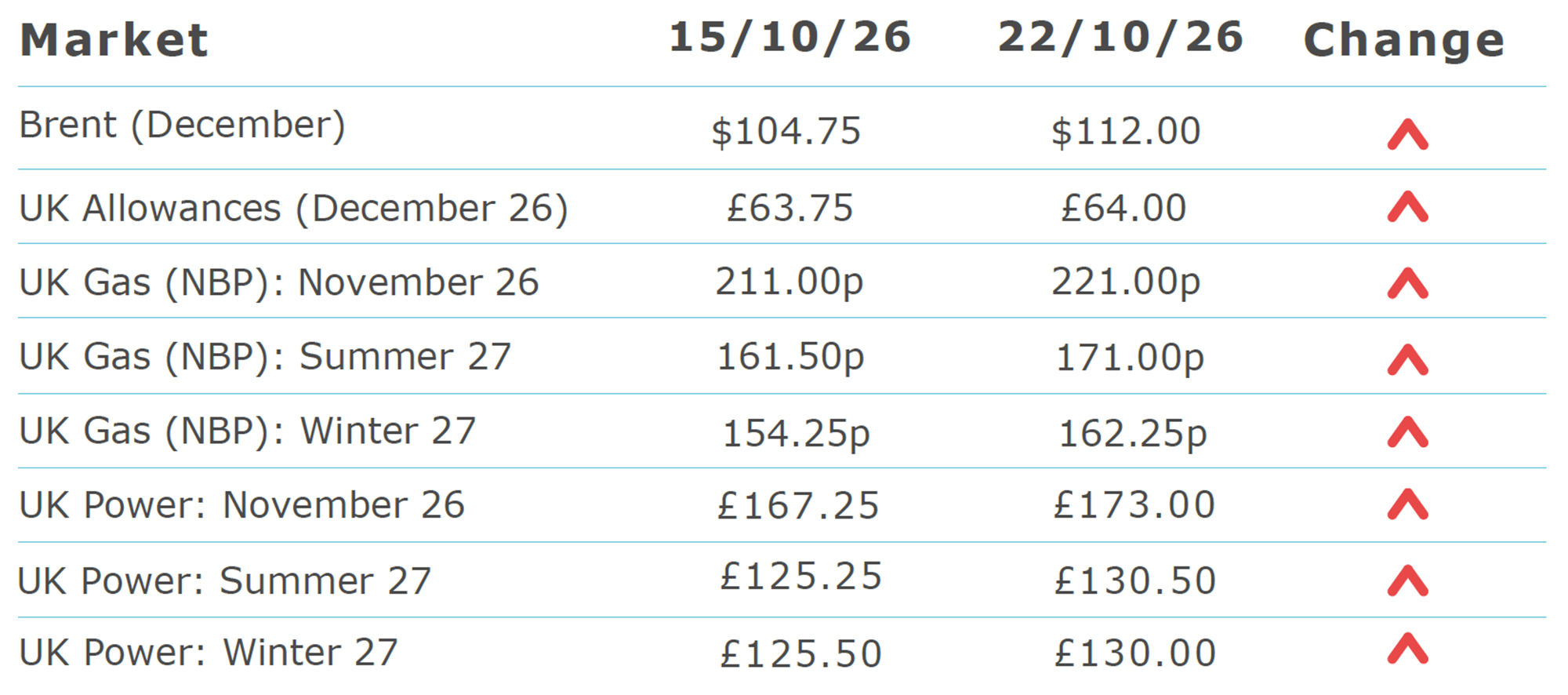
Oil prices have risen sharply, with Brent climbing above $119 a barrel to its highest level in more than a week, as attacks on Middle Eastern energy infrastructure intensified. Geopolitical risk is underpinning prices amid expectations of prolonged disruption to regional oil flows.
Asian fuel oil imports from Russia are set to reach record highs this month, exceeding 3 million tons. The increase reflects a re-routing of flows, although these volumes are unlikely to fully offset reduced supply from the Middle East.
Gas & Power
Iran launched a second round of strikes this morning on Qatar’s Ras Laffan LNG complex, hitting key infrastructure, triggering fires and causing further damage following yesterday’s attack. The escalation follows Israel’s strike on Iran’s South Pars field, with the extent of damage and the impact on Qatari LNG output still unclear.
Iran is considering a proposal to levy transit fees on vessels passing through the Strait of Hormuz, a lawmaker said on Thursday, a potential bid to monetise Tehran's grip over the Strait. According to the report, parliament was considering a bill under which countries using the strait for shipping, energy transit and food supplies would be required to pay tolls and taxes to Iran.
EU leaders are considering temporary measures to curb surging energy prices caused by the Iran war, including cuts to national energy taxes, increased state aid for industry, and adjustments to the emissions trading system, though member states remaindivided over proposals to weaken the bloc’s key carbon market.
Current Prices
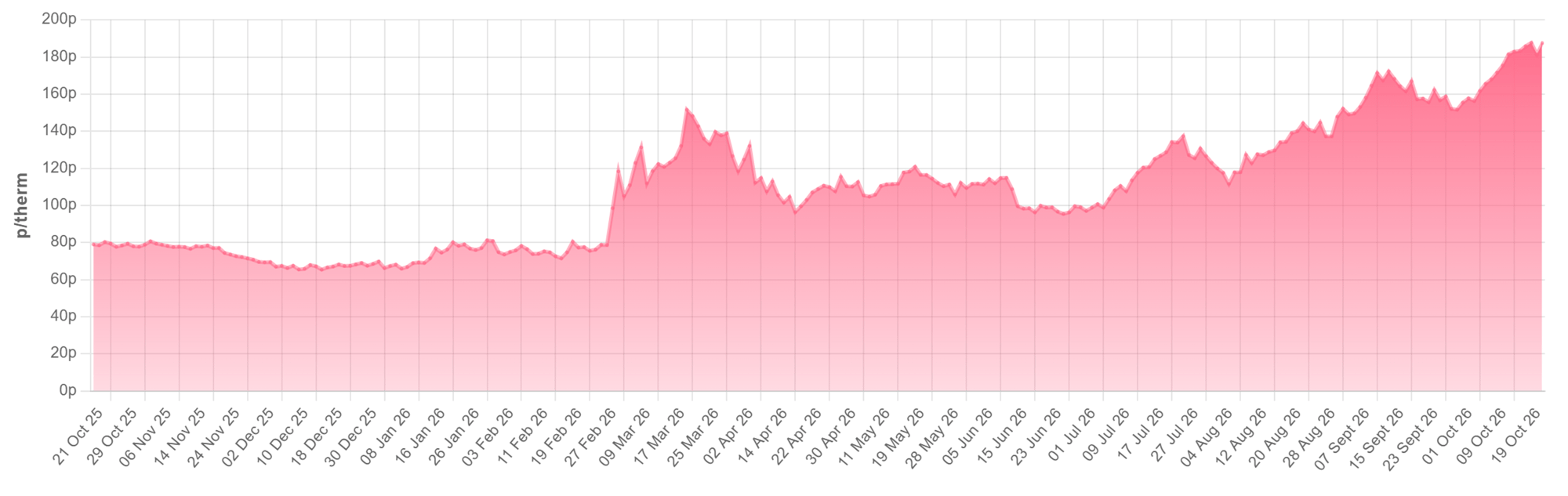
UK Gas (NBP) - Rolling 12-Month Average
Sustainability Spotlight
EU Member states demand ETS overhaul
10 Member States are calling on the European Commission to rethink the EU Emissions Trading Scheme (ETS) and extend free carbon allowances beyond 2034 to ease. With the war in Iran skyrocketing energy prices, Austria, Czech Republic, Croatia, Greece, Hungary, Italy, Poland, Romania and Slovakia warn that the current system poses an 'existential risk' for key industrial sectors and demand plans to reform the ETS by July at the latest.
EU Commission President von der Leyen hails the ETS as an essential tool to lower emissions and fund clean technologies, but some Member States consider it a threat to EU industrial competitiveness and are pressing for it to be scrapped.

All information displayed on this report is to be used for indicative purposes only. The accuracy can not be fully guaranteed and as such True Group holds no liability for actions taken based on the information presented in this report. The contents of the report may not be reproduced, copied or defaced without prior written consent of True Group.