Energy Market Analysis - September 2026
 True Group : Oct 14, 2026, 9:10:34 AM
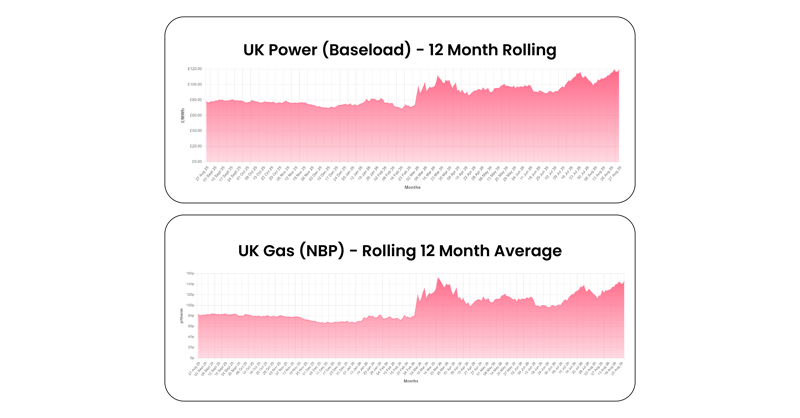
Droughts and geopolitical tensions are driving energy prices up in Europe, with implications for gas supply and market volatility. Stay informed on...

For many UK businesses, a substantial (and growing) proportion of the electricity bill has nothing to do with the wholesale price.
It sits quietly in the background, under the label of non-commodity charges. And unlike wholesale markets, many of these costs can be influenced.
What Are Non-Commodity Electricity Charges?
Non-commodity charges sit alongside the unit rate and typically include:
They are calculated in different ways - sometimes based on consumption, sometimes on capacity, sometimes on time of use.
Which makes them difficult to interpret. And when something is difficult to interpret, it often goes unchallenged.
As a result, many organisations treat these costs as fixed and unavoidable. They aren’t.
Why This Matters More Than You Think
For many end users, non-commodity charges now represent a significant proportion of total electricity spend.
That means optimisation here can have a meaningful impact, without changing suppliers or dramatically reducing consumption.
Crucially, it’s not about ‘using less energy’. It’s about ensuring the structure around your energy use reflects how your business actually operates.
Savings are often found by:
None of these require operational compromise, but all of them require visibility.
Where Savings Typically Hide
In practice, non-commodity optimisation tends to fall into three broad categories.
1. Eligibility-Based Savings
Some organisations qualify for schemes or reliefs that reduce specific non-commodity charges. These are not always applied automatically, and unless someone is actively checking, they can go unnoticed for years.
2. Setup-Based Savings
Many sites operate with legacy agreed capacities, outdated metering arrangements, or billing parameters that no longer reflect how electricity is used.
When operational reality and contractual setup diverge, unnecessary costs creep in. Correcting those mismatches can remove structural overspend.
3. Behaviour-Based Savings
Where time-of-use charging applies, shifting demand away from high-cost periods can materially reduce distribution and capacity-related charges.
This doesn’t require shutting down production. It just requires understanding where peaks occur and whether they are avoidable.
The Real Challenge Isn’t Complexity. It’s Visibility.
A typical optimisation review includes:
But the value is in translating complex charging structures into a clear, actionable commercial plan. Without that, non-commodity charges remain a black box, but with it, they become controllable.
From Fixed Cost to Competitive Advantage
Non-commodity charges are often dismissed as ‘just part of the bill’.
But when reviewed strategically, they represent:
In a market where margins matter, overlooking this portion of your electricity cost can quietly erode competitiveness.
Understanding it and optimising it can create savings that fund wider initiatives, including sustainability investment.
Want to See How This Connects?
Non-commodity optimisation is one of the three ‘hidden savings’ we’re unpacking in our upcoming webinar, Turn Secrets into Savings.
Alongside discount schemes and self-funding sustainability, we’ll show how these levers work together and how to identify which ones apply to your organisation.
If your focus has always been the unit rate, it may be time to look beyond it.

 True Group : Oct 14, 2026, 9:10:34 AM
Droughts and geopolitical tensions are driving energy prices up in Europe, with implications for gas supply and market volatility. Stay informed on...
True Group : Oct 12, 2026, 9:01:27 AM
Learn if you qualify for ESOS Phase 4 before the December 2026 deadline. Understand the new compliance requirements and how to avoid penalties.
Energy buyers face uncertainty in today's volatile market. Learn how flexible procurement can help manage risks and improve decision-making.