
3 min read

UK Energy Market Analysis - January 2026

UK Energy Market Analysis - January 2026

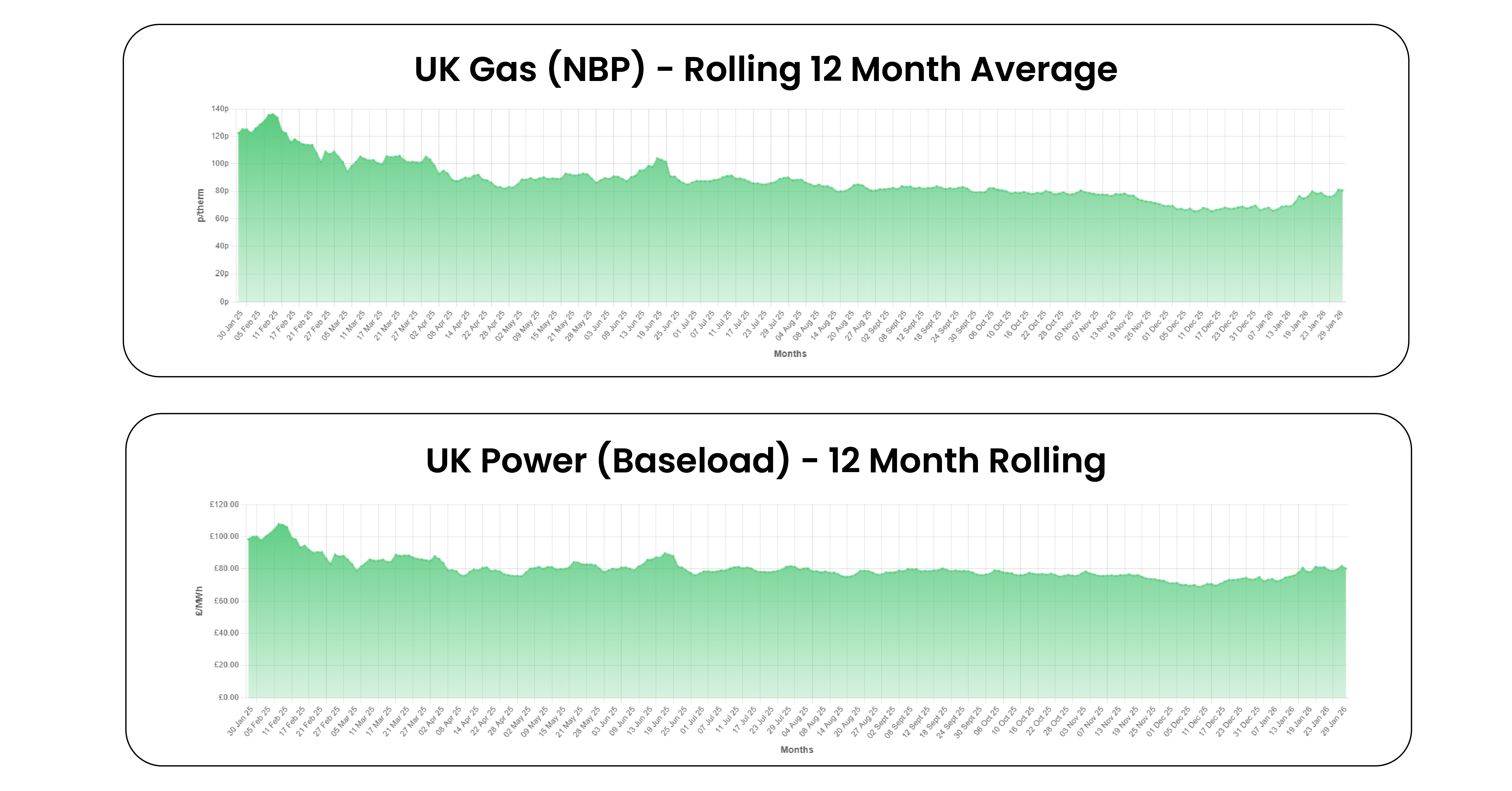
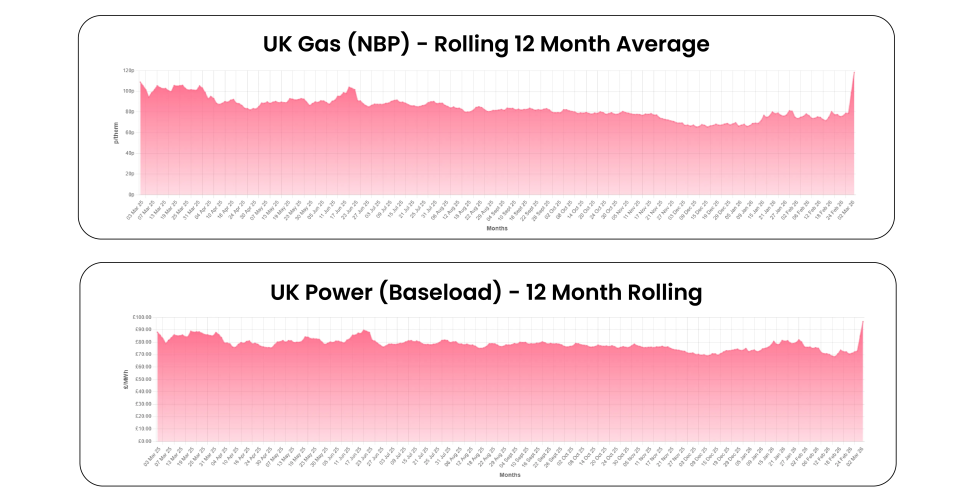
Gas prices have been volatile in recent weeks, with the February contract reaching a high of 113.00 ppt in late January. The rally was driven by expectations of another cold wave in the second half of February, alongside rising tensions in the Middle East that have heightened concerns over potential disruptions to LNG exports from Qatar. These risks come against the backdrop of low European gas storage levels, currently at 43.5%, down 4.9 percentage points week-on-week. While the rally may extend in the near term, assuming Qatari flows remain stable, prices are likely to resume their downtrend once milder temperatures set in, Golden Pass confirms its start date and rising solar generation gains momentum.


Economic Environment

  • UK construction output fell for the 12th month in a row in December, the longest period of decline in nearly two decades, as business conditions remained challenging and workloads fell, although the pace of the downturn eased from the 5½-year record drop seen in November.
  • Prices at major UK retailers rose at the fastest pace since February 2024 in January, driven by higher costs for food, furniture, and health and beauty products. The British Retail Consortium’s shop price index showed a 1.5% annual increase, up from 0.7% in December.
  • Eurozone inflation edged down to 2% in December, reaching the ECB’s target for the first time since summer and reinforcing the case for interest rates to remain steady in the near term.
  • The Federal Reserve left interest rates unchanged for the first time since July, 
    with Chair Powell citing robust economic growth and a stabilising labour market, pointing to a potentially extended pause before any additional rate cuts.


Oil

  • Global oil prices trended higher in January, with the front-month Brent contract reaching a six-month high. Gains were supported by a winter storm disrupting US production, rising US - Iran tensions, a weaker dollar, and ongoing outages in Kazakhstan. Prices traded within a $12 range over the month and finished up 13%.
  • Looking ahead, the IEA raised its 2026 oil demand growth forecast to 0.93 million barrels per day (mbpd) from 0.86 mbpd, citing normalising economic conditions and lower prices. Global supply is still expected to exceed demand by 3.69 mbpd, slightly below the previous estimate of 3.84 mbpd.


Gas

  • Several LNG companies imported natural gas into the US in late January to capitalize on record spot prices triggered by a severe cold wave that cut output and pushed demand to near-record levels. BP and Shell were reported to have shipped gas from Trinidad and Tobago to multiple US and Canadian terminals, an unusual move, as these cargoes would normally have gone to Europe.
  • Slovakia will file a lawsuit against the EU’s decision to ban Russian gas imports, adopted by a qualified majority despite opposition from Slovakia and Hungary. The ban will end Russian LNG imports by the end of this year and pipeline gas by late 2027; Hungary has also said it will challenge the law at the European Court of Justice, while the EU plans further measures to phase out Russian oil and nuclear fuel.
  • This month, the first LNG cargo of the year from Russia’s sanctioned Arctic LNG 2 plant was delivered to China’s Beihai LNG terminal after being loaded near Murmansk and shipped via the Suez Canal. Since starting production in late 2023, Arctic LNG 2 has sent all its cargoes to China, delivering 23 cargoes totalling 1.3 million tons to Beihai LNG last year.
Jan_Gas


Power

  • According to a draft text seen by the FT, the EU wants any future UK government to pay significant compensation if it withdraws from a post-Brexit reset deal, including a proposed veterinary agreement to reduce food trade red tape. The veterinary deal is central to Keir Starmer’s broader EU reset, alongside plans to re-link UK and EU carbon pricing schemes.
  • EU countries also want Britain to make financial contributions to poorer EU member states as a condition for rejoining the bloc’s internal energy market, a demand that could complicate upcoming negotiations to reset post-Brexit relations. While closer energy ties could save hundreds of millions of euros by reducing costly inefficiencies in cross-border power trading, the funding issue is politically sensitive in the UK and still under debate within the EU.
  • EDF plans to restart its Flamanville 1 (1.3 GW) and Flamanville 3 (1.6 GW) reactors early February, after sea salt damaged equipment during storm Goretti. Both units were disconnected from the grid in the early hours of 9 January as winds of more than 200 km/h hit northern France.
  • Despite strong short-term oil, gas and power prices this month, Summer 26 prices have risen by only 6%. This suggests the market views the current volatility as temporary, expecting prices to resume their decrease.

Jan_Elec


If you would like the latest insights weekly, sign up for our Energy Market Update.


Subscribe


UK Energy Market Analysis - April

UK Energy Market Analysis - April

In the economic environment, equity markets have shown only a modest response to the tense geopolitical situation, with the FTSE 100 trading close to...
Read More
UK Energy Market Analysis - May

UK Energy Market Analysis - May

Equity markets have experienced a decline from their all-time highs at the beginning of the month due to concerns about the potential long-term...
Read More
UK Energy Market Analysis - September 2024

UK Energy Market Analysis - September 2024

Global equity markets responded positively to the Federal Reserve’s decision to cut interest rates by half a point in September. This move was...

Read More