

3 min read

Energy Market Analysis - September 2026

Energy Market Analysis - September 2026

Drought-related constraints on hydro and nuclear generation, combined with very low wind output and high gas prices, have pushed day-ahead prices above €200.00/MWh across several North-West European markets this week. This has added pressure to forward prices, which remain volatile and highly sensitive to developments in the Middle East. So far, US-Iran negotiations have failed to allow Qatar to resume LNG exports, leaving European and Asian buyers with limited alternatives. Attention is now turning to temperatures, with the first colder-than-average conditions expected in the second half of next week, while European gas storage stands at 71.50%, up 1.1 percentage points this week. 


Economic Environment

•    The Federal Reserve raised interest rates by 0.25% to 3.75-4.00%, its first increase since 2023, with policymakers pencilling in a potential further hike later this year, while the Bank of England kept rates on hold at 3.75%.
•    UK services growth slowed in September, with the PMI falling to 51.7 from 52.5, while inflationary pressures intensified amid higher energy costs. Manufacturing strengthened, with the PMI rising to 52.0 from 51.7, supported by stronger domestic orders and improved business optimism.
•    European equities came under pressure in September as faltering US-Iran negotiations sent oil prices higher. Higher energy prices also revived inflation concerns and kept bond yields elevated, weighing on regional markets.


Oil

•    Brent prices rose in September as attacks on Middle Eastern shipping and Saudi oil infrastructure heightened supply concerns. Prices later eased as Saudi exports recovered and US-Iran talks resumed, although disruption through the Strait of Hormuz continued to provide support. The front-month contract traded within a $19/bbl range and ended the month 14% higher.
•    Goldman expects Chinese crude imports to rise by only around 600,000 b/d in Q4 versus Q3, assuming prices remain elevated. This suggests the anticipated recovery in Chinese buying will be relatively modest, providing limited additional support to global oil demand.


Gas

•    LNG exports from regions outside the Persian Gulf have been largely steady, aside from planned maintenance at Australia’s Ichthys LNG plant and Cove Point in the US. Observed feedgas flows to Cove Point have now fallen to almost zero, indicating that the scheduled maintenance has begun. The outage is expected to last for at least three weeks.
•    The ongoing crisis over the Strait of Hormuz could delay some of QatarEnergy’s expansion projects, as critical equipment remains unable to reach Qatar, its CEO said last week. Several trains linked to the North Field East expansion are due to start up in 2027, followed by the North Field South expansion in 2028. Meanwhile, the two LNG trains damaged in the March attacks are expected to take three years to repair.
•    Long-term forecasts from most analysts point to a warmer-than-normal start to winter across western Europe, with Britain expected to be 0.5 to 1°C above the long-term average, partly driven by a strong El Niño. This would be welcome given Europe’s low gas storage level, currently at 71.33%, which leaves the market vulnerable to further supply disruptions and periods of cold weather.

Aug_Gas

Power

•    Sweden’s Vattenfall announced that it has taken a final investment decision to build a large battery storage facility in Germany, which will be located at the site of the former Brunsbüttel nuclear power plant. The 254 MW battery will have a storage capacity of around 1,000 MWh and is expected to be connected to the grid by the end of 2028.
•    The European Parliament’s environment committee has backed extending the automatic cancellation of surplus EU allowances above 400 million in the Market Stability Reserve until February 2027, before raising the threshold to 650 million from March 2027. This contrasts with the European Commission’s proposal to end automatic cancellations as soon as possible, which would leave more allowances in reserve to respond to future market tightness.
•    Exceptionally low French river flows could curb nuclear generation until at least mid-October, with little rainfall expected before then. Environmental constraints have already cut output by a record 10.6 TWhs this year (2.8% of 2025 generation), with available capacity currently restricted by around 9%.
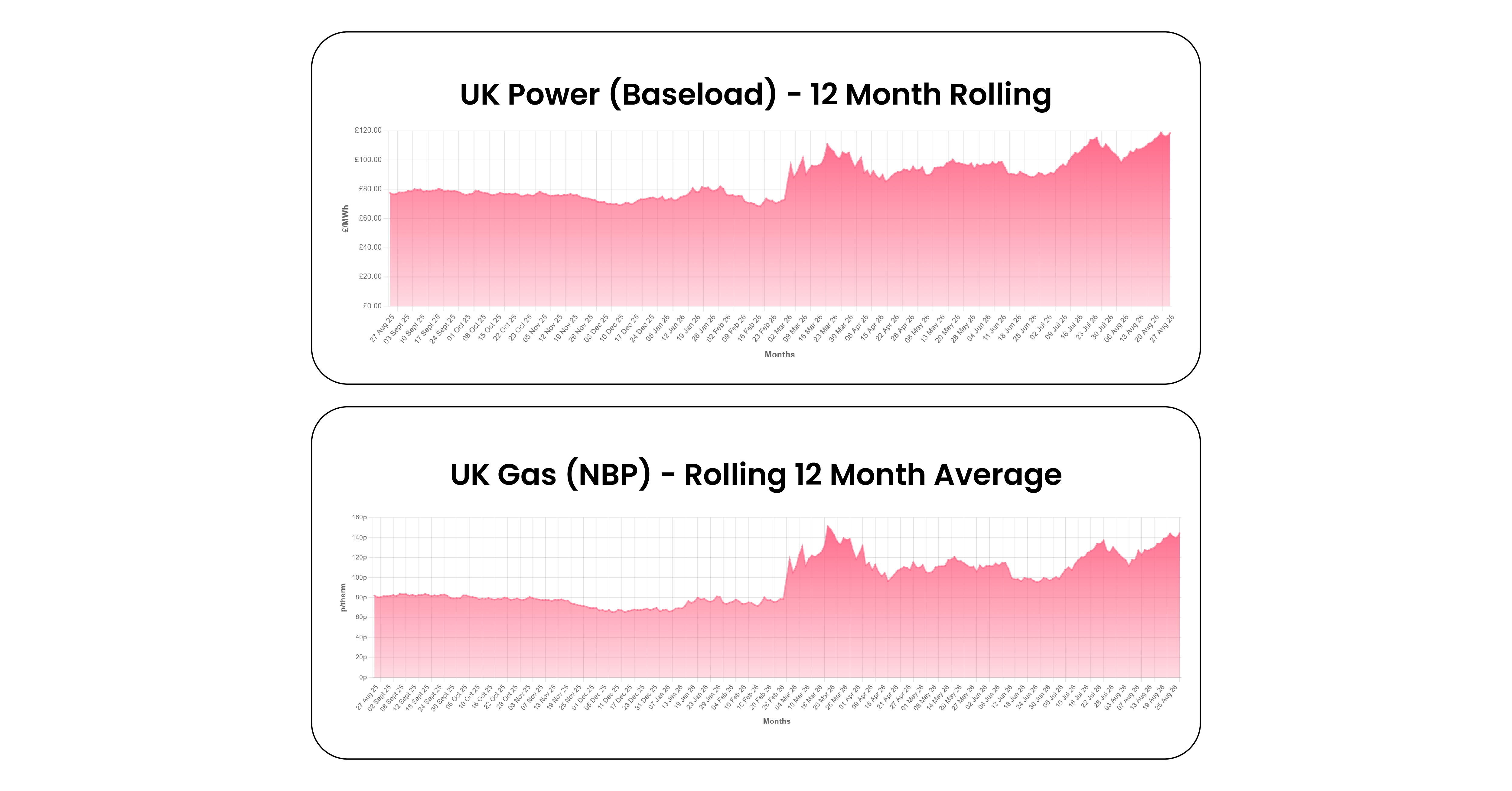
•    UK power prices rose in September, with the Winter 26 baseload contract trading within a £23/MWh range and ending the month 0.5% higher. The increase was driven by higher gas prices amid continued disruption to LNG flows through the Strait of Hormuz and low European storage levels, with stronger carbon prices and periods of low renewable generation providing additional support.

Aug_Elec

If you would like the latest insights weekly, sign up for our Energy Market Update.


Subscribe


Energy Market Analysis - September 2026

Energy Market Analysis - September 2026

Drought-related constraints on hydro and nuclear generation, combined with very low wind output and high gas prices, have pushed day-ahead prices...


Read More
Do You Qualify for ESOS Phase 4?

Do You Qualify for ESOS Phase 4?

The qualification date for the fourth phase of the Energy Savings Opportunity Scheme is 31 December 2026, fewer than 100 days away. Meet the...

Read More
October's Renewal Round: Why Energy Buyers Fear Getting It Wrong

October's Renewal Round: Why Energy Buyers Fear Getting It Wrong

With the October renewal round now largely behind us, the one thing almost every buyer we've spoken to agrees on is that uncertainty has been a...

Read More